With Dynamic Reviewer Safe-PenTest module, you can inspect your Web Application, REST API, SOAP Services, App Engines and Micro-Services during running, directly using your Browser, in non-invasive way.
DAST is not dead, legacy DASTs are. Modern DASTs are changing the industry
Swan Beaujard - AppSec Conference
Until a couple of years ago, we’re seeing only open-source PenTest tools that can genuinely mimic how a human tester works, or just fire off scans.
Nowadays, Pentest is something different, due to the intensive AI usage.
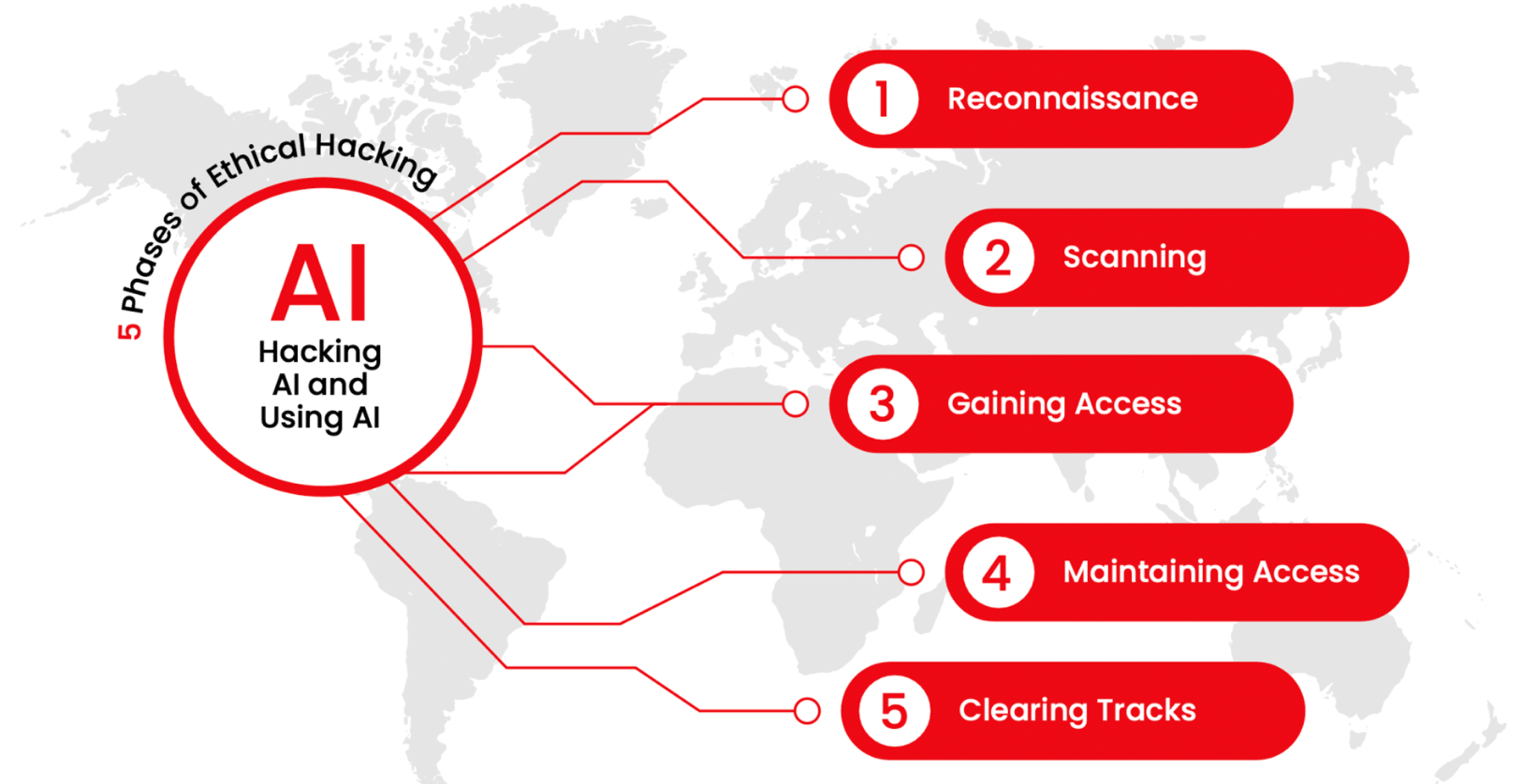
Capabilities such as automation, predictive analysis, and the development of sophisticated attack methods are significantly reshaping the cybersecurity landscape.
Dynamic Reviewer can run in different modes, with or wothout AI usage.
Discovery/AI reconnaissance without firing exploits (Light mode). It’s built to analyze URLs, JS files, and headers to find patterns that look like trouble, explaining why a specific endpoint looks vulnerable, usually giving you a sample payload to try yourself. Some examples are JWT, React, Angular, Injections, XSS, CSRF, SSRF and Auth bypass weaknesses. This makes it a great choice if you need to scan something close to production without worrying about crashing services or DB. it ignores things like business logic flaws or weird config issues. If the bug isn’t in its specific “hit list,” it’ll ignore it, due is optimized by speed.
Exploit/AI autonomous exploitation. Testing “vulnerable by design” apps become eye-opening (Standard mode). For example, it didn’t say “this login looks weak”; it bypassed the login, dumped data, hands the screenshots and logs to prove it. It provides: Access Control - IDOR, privilege escalation, auth bypass. Injection Attacks - SQL, NoSQL, LDAP, XPath and command injection. Server-Side - SSRF, XXE, deserialization flaws. Client-Side - XSS, prototype pollution, DOM vulnerabilities. Business Logic - Race conditions, workflow manipulation. Authentication - JWT vulnerabilities, session management. Infrastructure - Misconfigurations, exposed services. The key difference here is evidence. If it says there’s a bug, you can be reasonably certain it’s there.
AI agent testing. It lets you stitch together LLMs and Dynamic Reviewer native engine with the tools you already use (Nmap, Burp, etc.) to build automated PenTest agents on-the-fly (Deep mode). It comes with built-in tools for deep reconnaissance (automated OSINT and attack surface mapping), exploitation, WAF/WAAS/Gateway proof API attacks and privilege escalation. It stucks mostly to the Red Team side of things for those tasks. Agents are built in a way that could scan an app, analyze the results, and then pivot into exploitation and reporting with a single prompt to get it going. It even gets handling some internal network stuff like “Pass the Hash” attacks.
DAST-Penetration Testing made easy
The following installation options are available:
Web App. You can install it at your premises, installable in any host OS supporting Docker.
Team Reviewer Plugin. BlackBox-WhiteBox DAST plugin. Team Reviewer pre-installed on premises is required.
Cloud App. Similar to a local installed app, it provides various Usage Modes and Connection Modes.
Its special Safe-PenTest feature (AI reconnaissance-Light mode), allows to explore vulnerabilities in your Web Applications, at the same time to keeping them securely. No need of Backups before PenTest, we guarantee our tool will keep your system and database integrity.
You can import third-party results from Security Scanners, Host Scanners and Proof-of-Exploits tools. Their results will be correlated automatically and a unified Enterprise Report is generated.
Dynamic Reviewer DAST provides a robust and stable framework for Web Application Security Testing, suitable for all Security Analysts, QA and Developers with False Positives and False Negatives support, offering an easy-to-use Web GUI, Advanced Scan and Enterprise Reporting capabilities.
Usage Modes
Dynamic Reviewer Provides two usage modes:
BlackBox mode. It is placed in the role of the average hacker, with no internal knowledge of the target system. Testers using Dynamic Reviewer are not provided with any architecture diagrams or source code that is not publicly available. Dynamic Reviewer determines the vulnerabilities in a system that are exploitable from outside the network.
This means that BlackBox penetration testing relies on dynamic analysis of currently running programs and systems within the target network.
Dynamic Reviewer follows the OWASP Web Security Testing Guide, chapter 4. Web Application Security Testing.
>The Technology discovery is able to understand which CMS is used (if any) and change the vulnerabilities' detection to Exploit-simulation mode.
Further, Dynamic Reviewer analyzes in deep the client-side code (Ajax, DOM, JavaScript, TypeScript, etc.) discovering the largest number of client-side vulnerabilities in the market.
WhiteBox mode. It performs Authentication before starting the scan. It provides the following Login modes:
Form-Based Authentication: traditional login with User and Password as Web form, You can configure more than one user, they will be tested all.
Token-Based Authentication: You can modify the request headers for inserting token. Suitable for authenticated WebSockets, JWT and gRPC too.
Scan Types
The Safe-PenTest scan type is named Light. It applies the following default settings:
Passive scans enabled
Only non-instrusive Active scans enabled
Only non-instrusive DOM scans enabled
Vulnerable Javascript scan
Only non-instrusive Exploits verified but not aplied
Target Web site, DB and config will be untouched
Standard scan applies the following default settings:
Both Active and Passive scans enabled
Technology discovery will drive the scan
Scanning deep: up to 3 nested pages. Does not follow the external links
Timeout per page: 10 minutes
Total Passive Scan Timeout: 30 minutes
DOM scan enabled
Vulnerable Javascript scan
Exploits tested (some page browsing can generate new/updated records in your DB/config)
Deep scan applies the following
Both Active and Passive scans enabled
Technology discovery will drive the scan
Early warning detection scanners enabled (i.e. newest vulnerabilities discovery)
Scanning deep: up to 10 nested pages. Does not follow the external links
Timeout per page: 20 minutes
Total Passive Scan Timeout: 60 minutes
DOM + AJAX scan enabled
Web pages Crawling enabled (generate new/updated records in your DB/config)
Exploits applied (target Web site will be broken)
Connection Modes
Both on premises and Cloud installations can connect to the target Web Application in different modes:
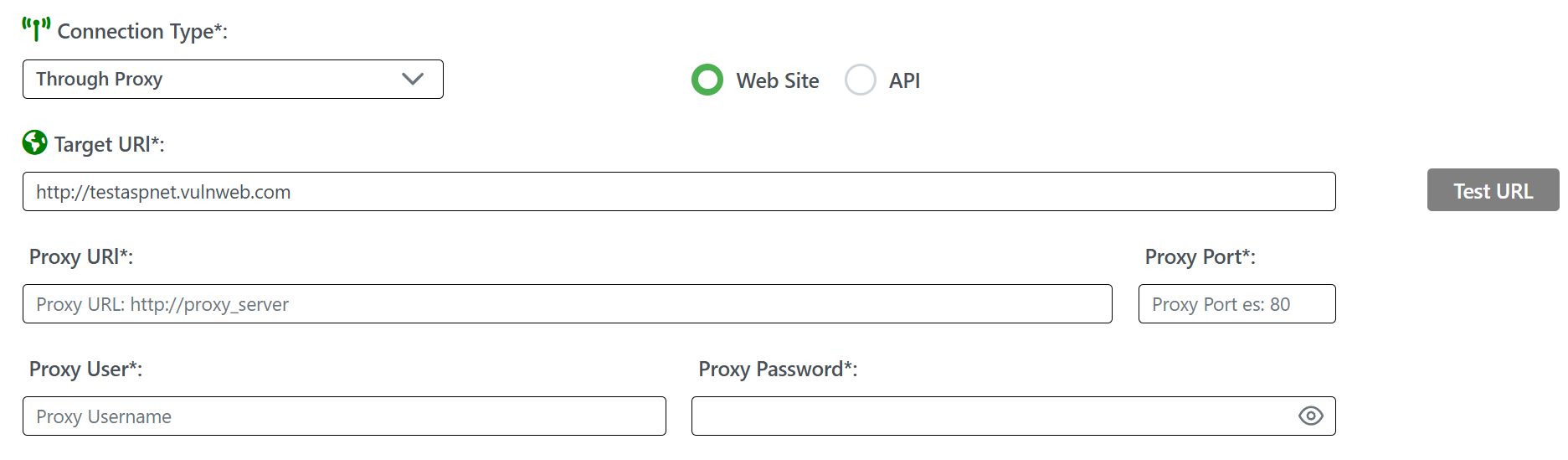
Direct. Dynamic Reviewer will reach the target Web Application using a Direct connection to Internet
Through Proxy. For reaching the target Web Application you need a proxy. You can configure the Proxy URI, Proxy TCP Port, Proxy User and Proxy Password
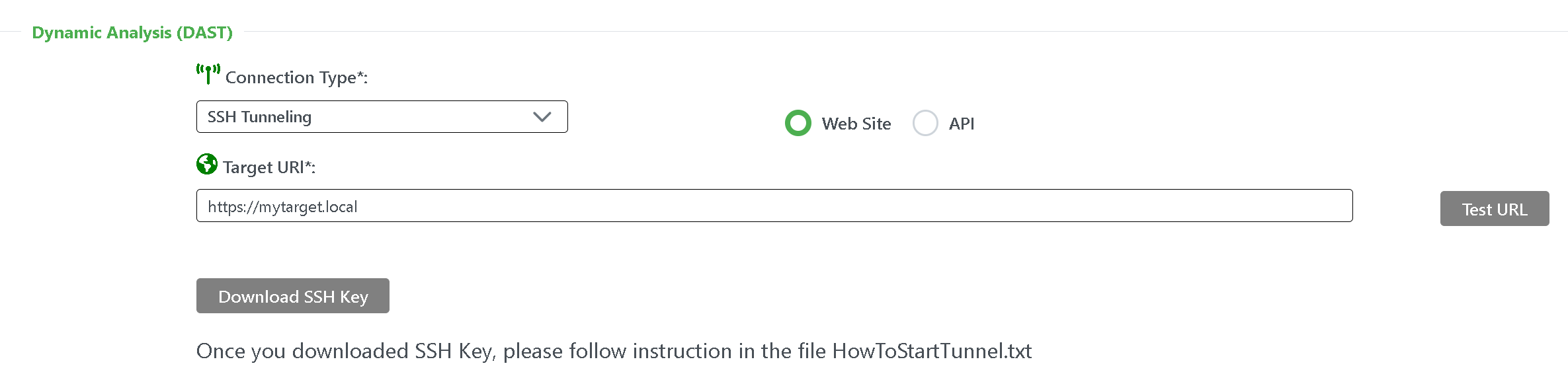
SSH Tunnelling. Used for target Website/API available in the internal network only. A temporary SSH key will be automatically generated for the current Scan. The User can download it and execute the commands shown in the screen. It will create a SSH Tunnel to reach the target Website/API Application.
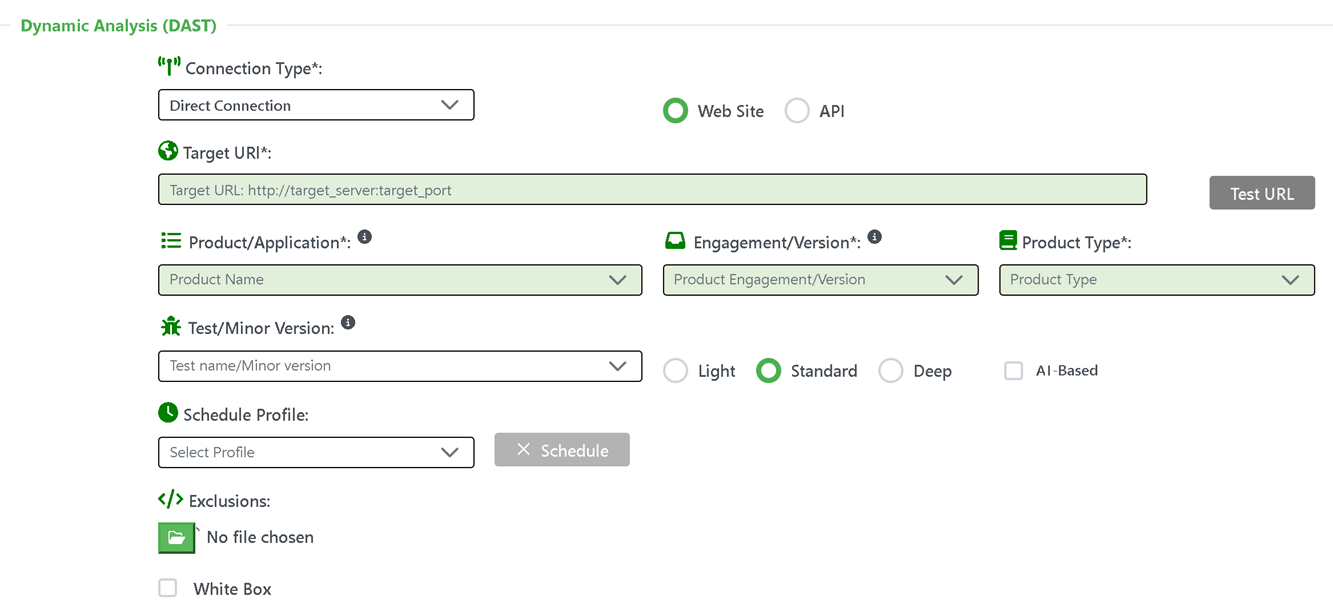
AI-Based
You can enable or disable the AI features. Significant faster than traditional scan. It works differently depending on scan mode (Light, Standard and Deep), as described above.
Web Site or API
You can scan a web site (HTTP, HTTPS, WSS, FTP, etc.) or different kind of API:

Exclusions
You can import an Exclusion List, in plaintext format. It should contain the list of web pages, microservices or REST API you want to exclude from the scan.

This can make the scan time shorter and focus the analysis to specific Web site sections only.
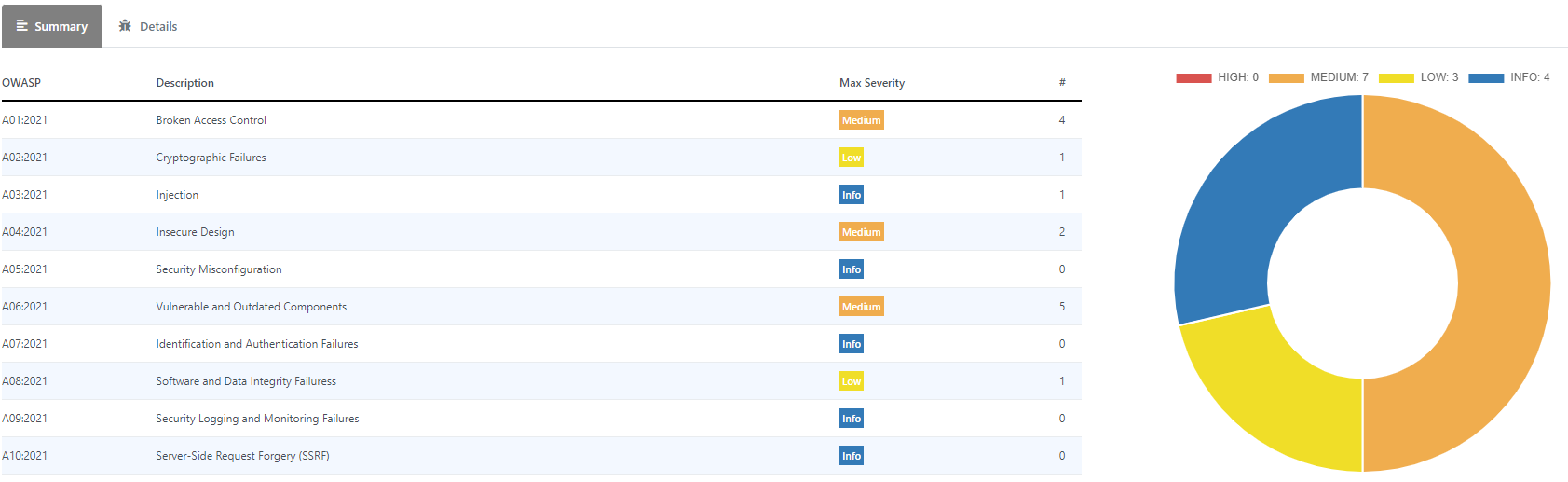
Summary
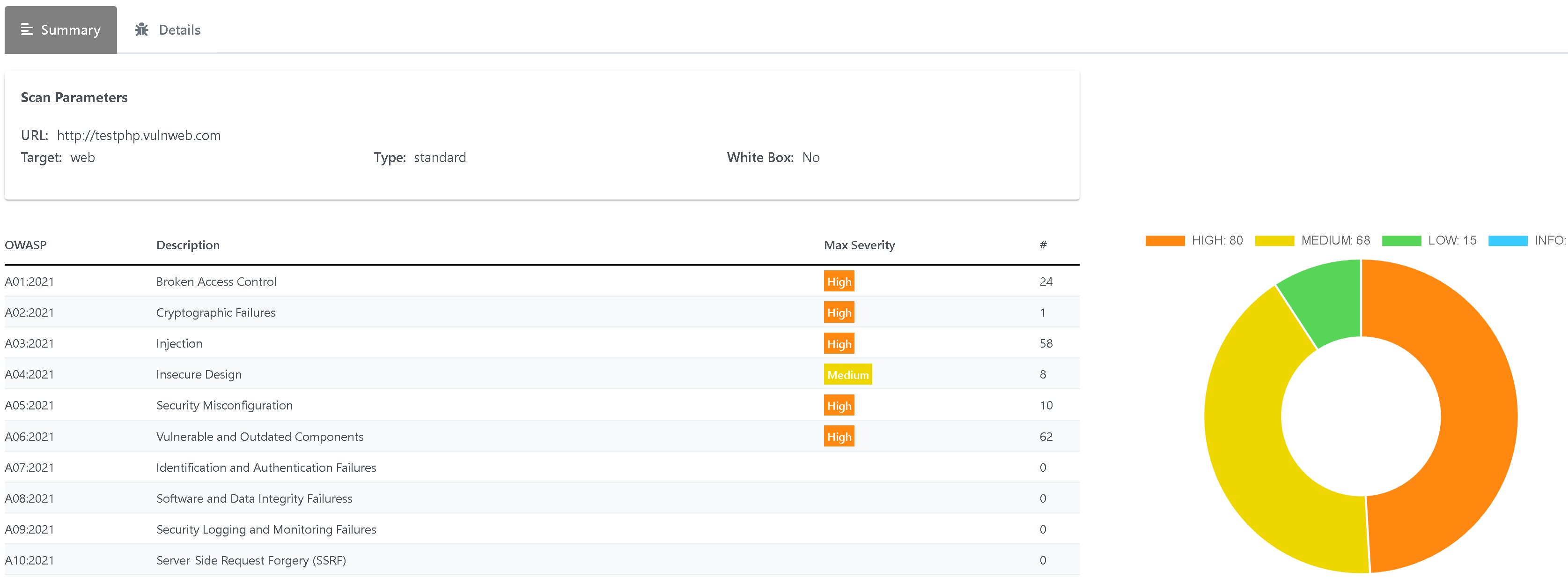
Once Scan is terminated, you have a list of Findings classified by OWASP:
Findings Details
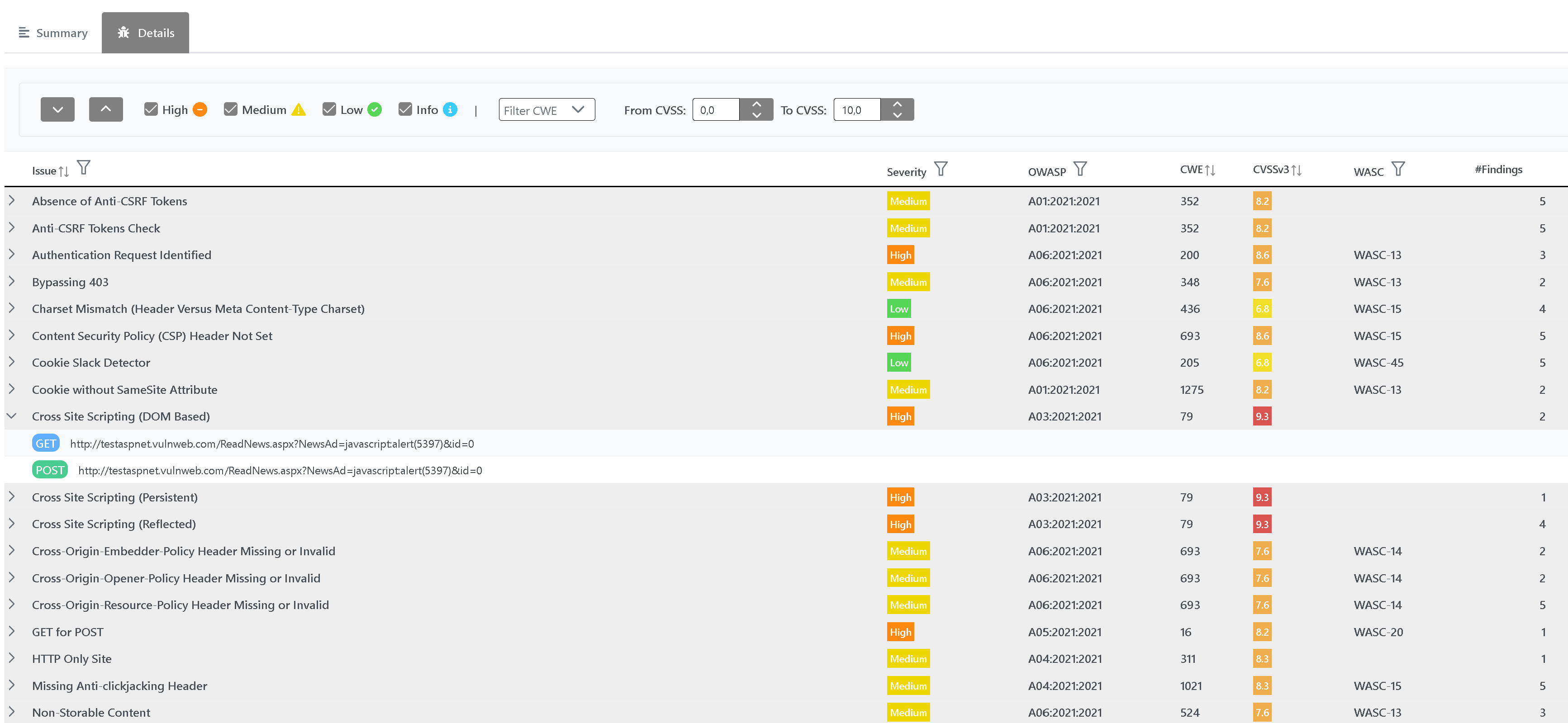
You can:
Suppress a Finding Category (example: all Blind SQL Injection issues)
Suppress one or more Findings inside a Category
Mark a single Finding or a Findings' group as False Positive or Accepted Risk
Add Comments to the entire scan, to a Finding Category, to a single Finding, to a False Positive or Accepted Risk
Modify, Delete, change Severity tag, Merge Findings
Import Results from third-party tools
Export Combined Results in PDF, HTML, JSON, CSV, Excel and Word format
Add Evidences to the Findings
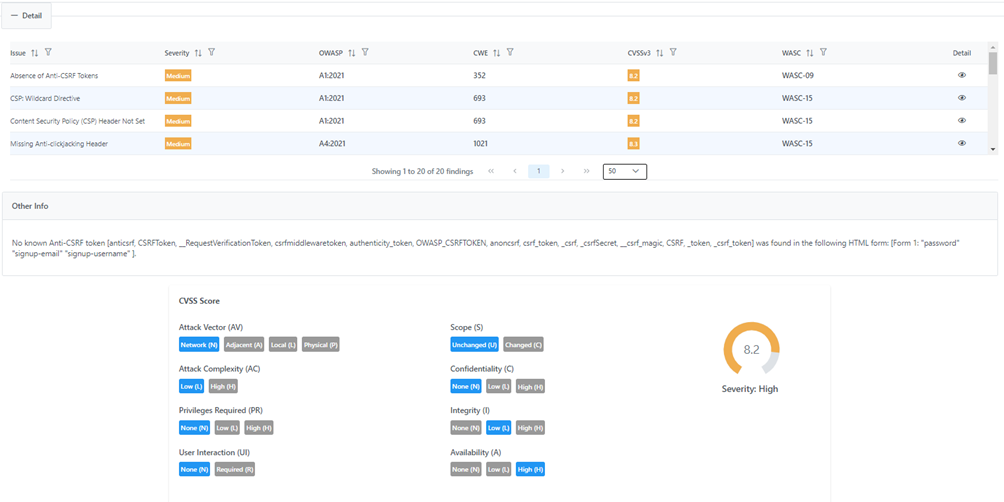
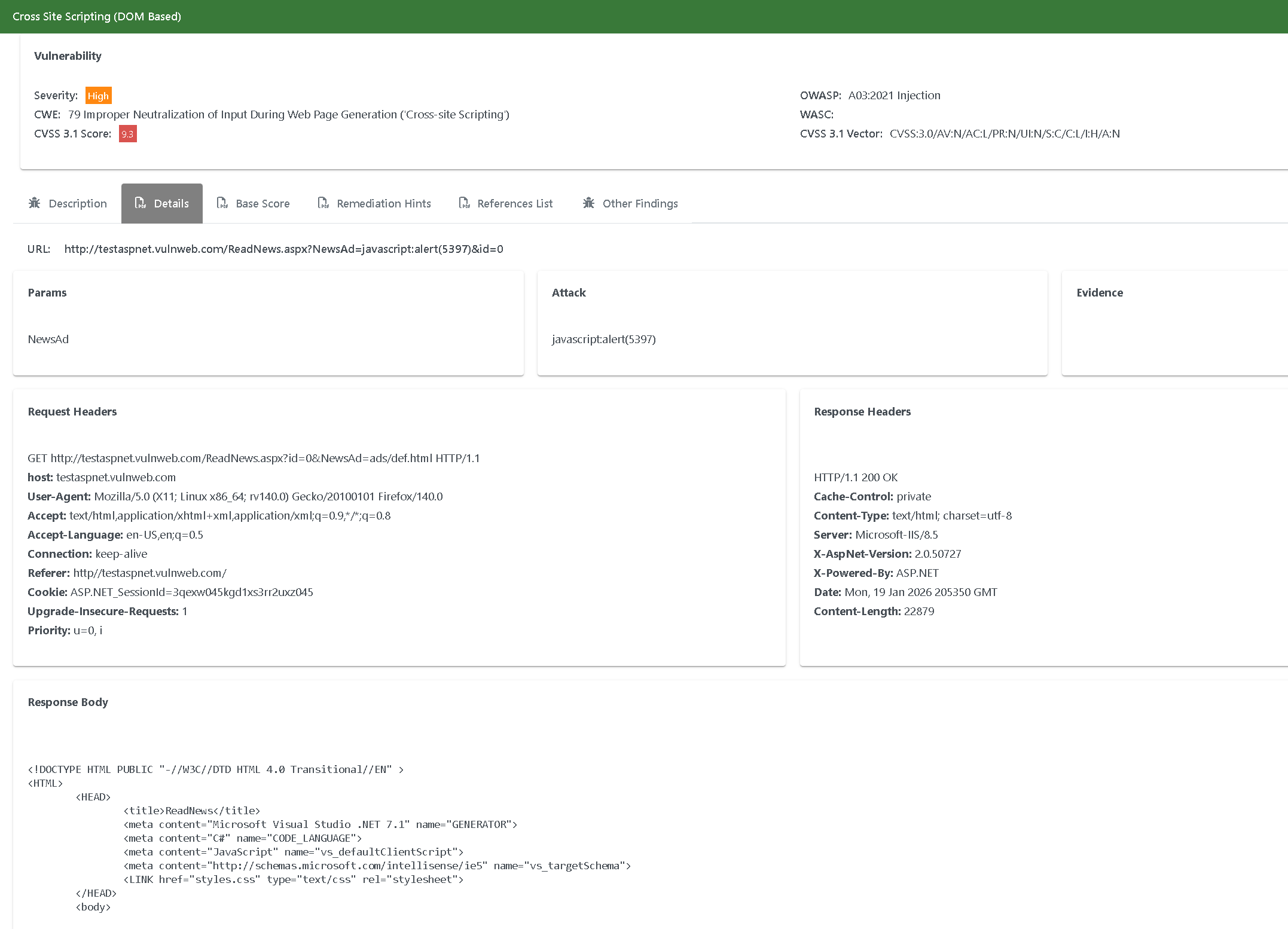
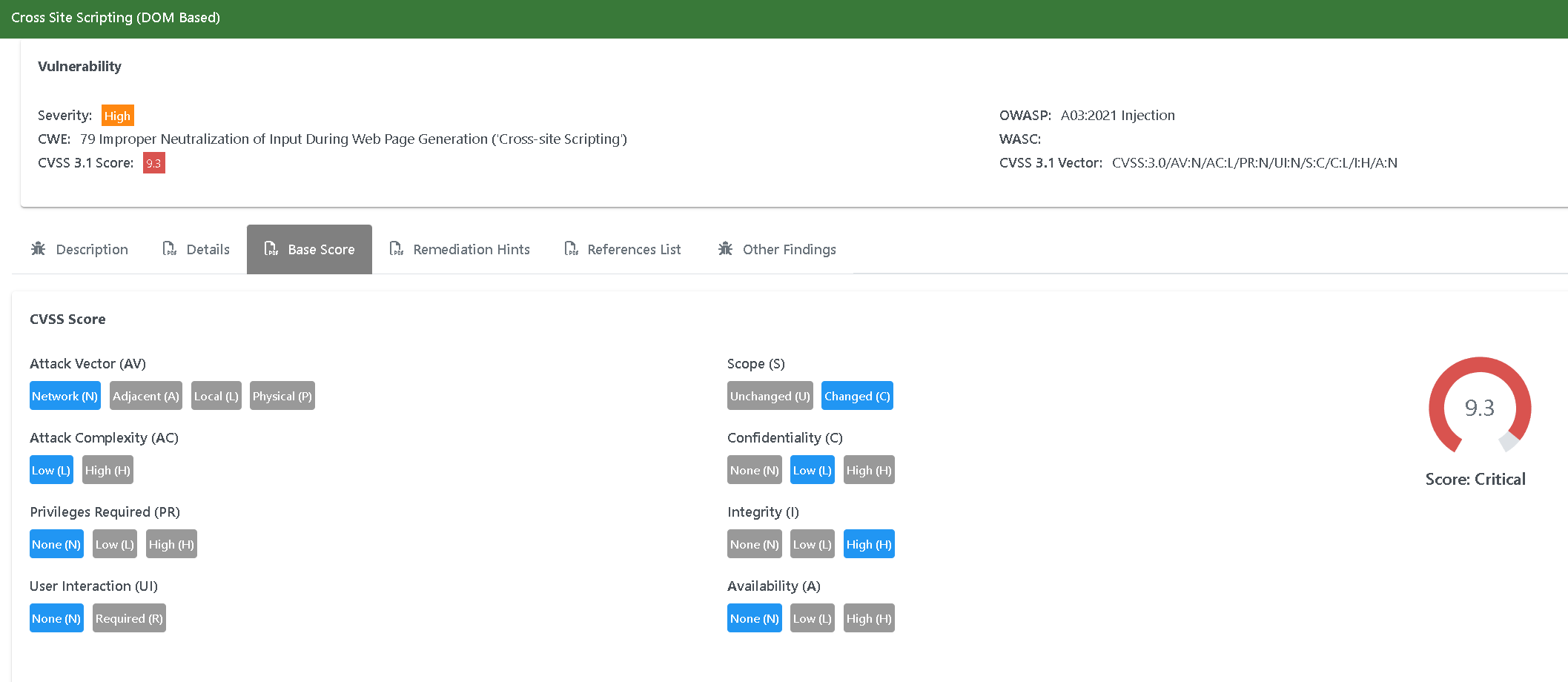
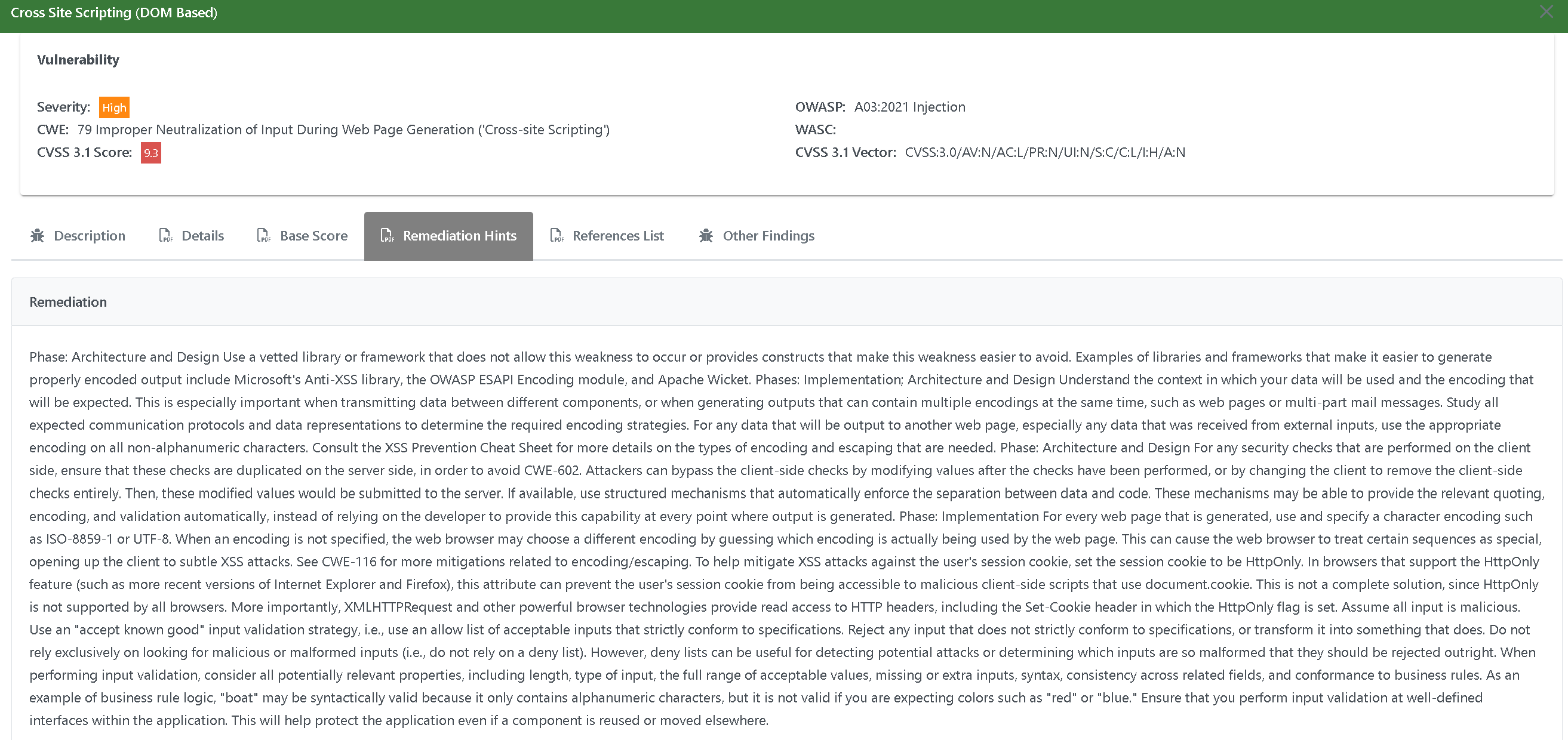
You can drill-down to each Finding Category:
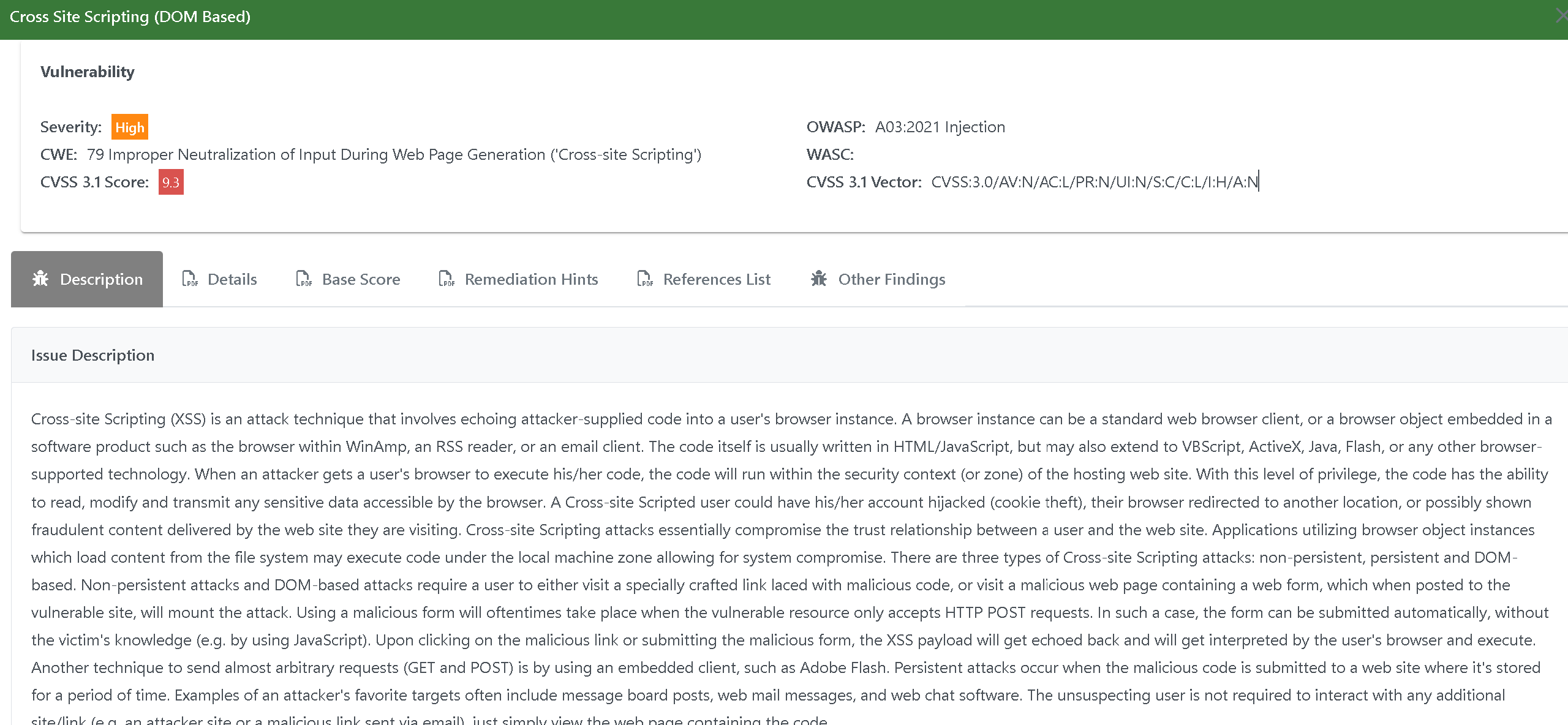
More in Details:
CVSS:
Remediation Hints:
Each Category groups a bunch of vulnerablities found in the virtual Attacks:
We call such Attacks ‘virtual’ because Dynamic Reviewer does not really execute the Attack/Exploit, but simulate it only.
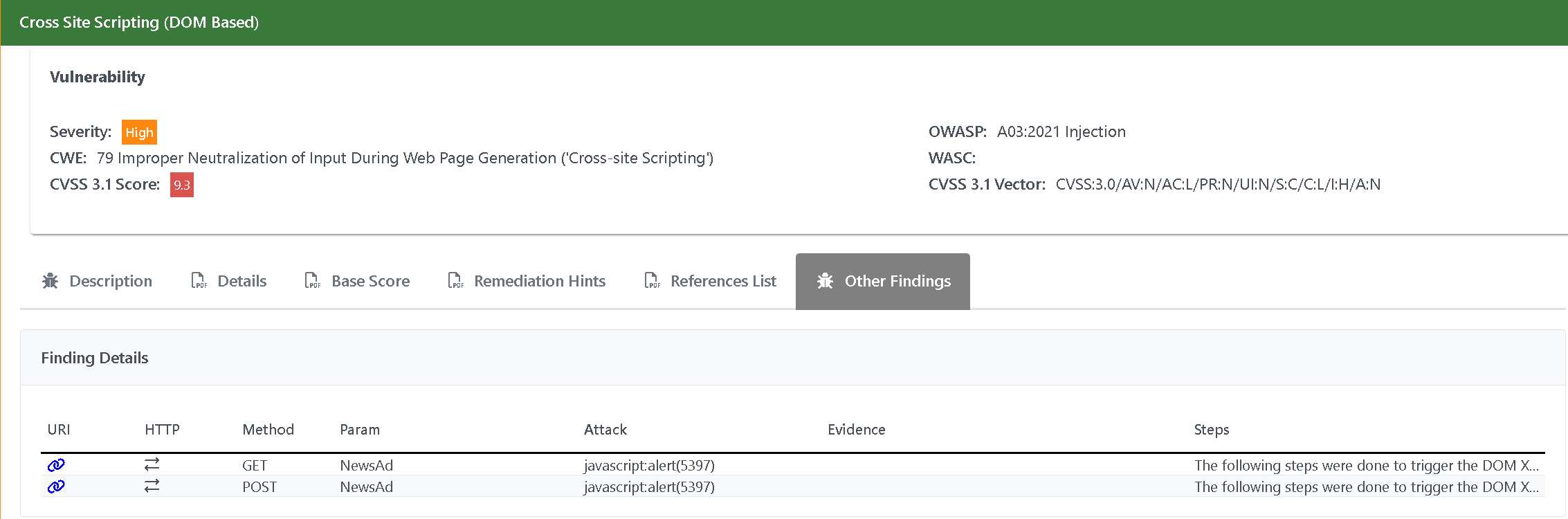
Further, instead of declaring hundreds or even thousands of vulnerabilities you can focus of their categories, for a smarter Vulnerability Management.
SCHEDULING
With new security threats emerging daily, conducting a one-time pentest isn’t sufficient to maintain an effective security posture. Even the common practice of running annual pentests often isn’t adequate for highly regulated industries, high-risk organizations, or rapidly changing infrastructures. A common use case is running scans automatically on a recurring basis, for example once a week or once a month or other recurring frequencies. This enables continuous autonomous pentesting without any user intervention - no need to sign-in to the dashboard to create or launch the scan.
When scanning, you can schedule the scans using Profiles, stored by name:
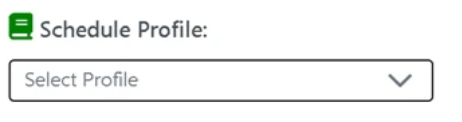
You can define different Schedule Profiles:
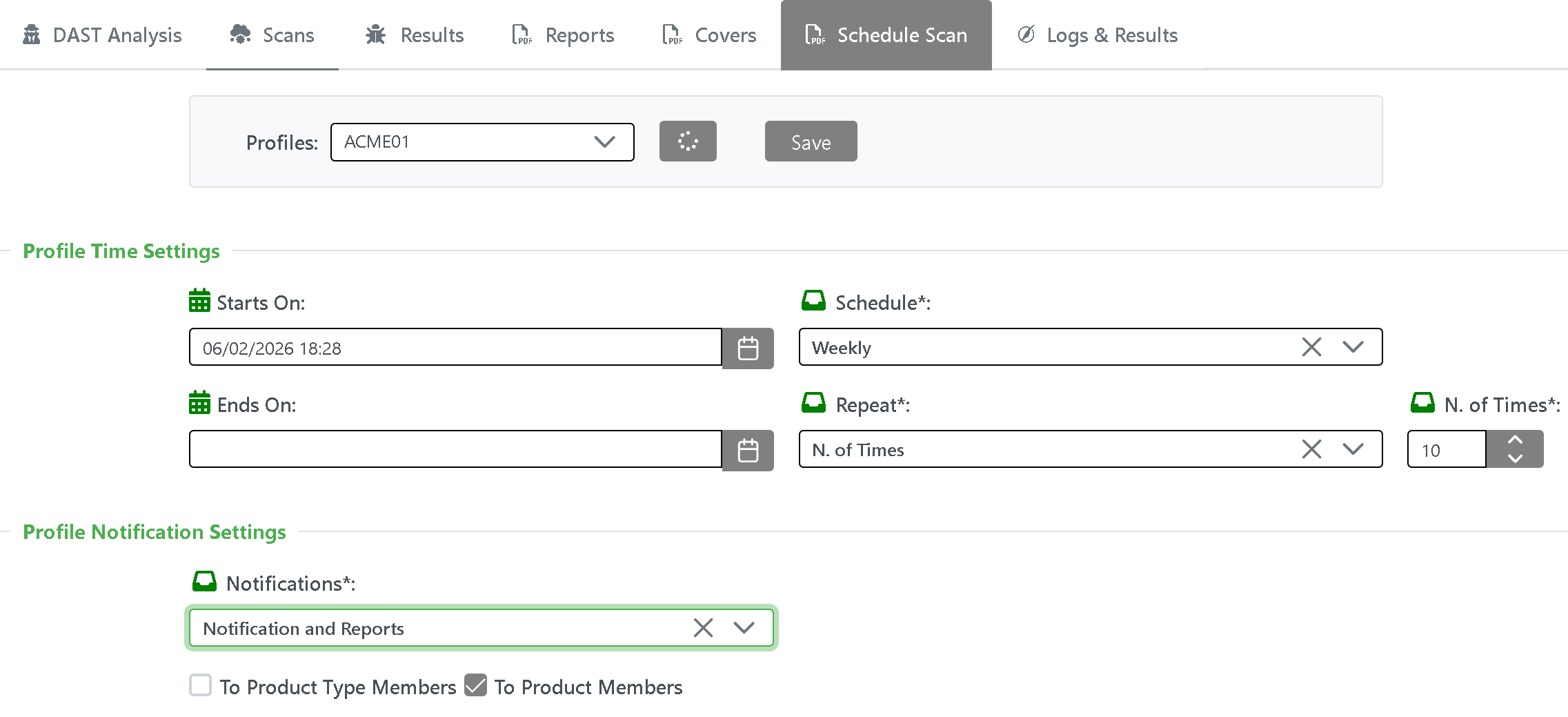
You can schedule scans from Start to End Date/Time.
You can define the Schedule frequency: Daily, Weekly, Twice a month, Monthly, Bimonthly, Quarterly, Twice a year, Yearly.
You can Repeat the scan: Never, Forever or for a N.of Times.
If you wish to be notified once a scan is complete, you need to enable the Notifications to: Product Type Members or Product Members
The notification can include: Notification only, Reports or Notification and Reports.
The notification will follow our standard Notification channels, e-mail and Webhook included.
Once you created a new Schedule Profile, you can load and use it at anytime by referencing its name.
Authorized users only can create and remove a Schedule Profile.
Regulatory and Compliance
Applicable regulatory frameworks may dictate specific requirements for pentesting cadence. For example, some of the most important pentesting standards for compliance include:
PCI DSS: Pentesting required at least annually and after any major infrastructure updates.
NIS2: the directive does not explicitly use the word "pentest," it mandates regular, risk-based testing of security measures (Article 21)
Service Organization Control 2 (SOC 2): Requires general policies for securing systems and data without specifically mandating pentesting, but it is considered a requirement in practice for most organizations. It acts as essential evidence to satisfy Trust Services Criteria (TSC) (specifically Security/CC7.1) for monitoring, risk assessment, and vulnerability management.
HIPAA: Currently requires protecting data integrity and security and recommends without requiring pentesting, but proposed HIPAA security rule changes may soon mandate biannual vulnerability scanning and annual pentesting.
National Institute of Standards and Technology (NIST): Requires pentesting for certain systems and recommends structured phases for planning, reconnoitering, conducting, and reporting pentests.
International Organization for Standardization (ISO) 27001: Requires thorough risk assessments without specifically mandating pentesting for certification, but it is strongly recommended as a best practice to meet requirements for risk management and technical vulnerability assessment. The standard, specifically under Annex A controls like A.8.8 (Management of Technical Vulnerabilities) in the 2022 version, requires organizations to regularly identify, evaluate, and mitigate security weaknesses.
GDPR
Further to above standards, Dynamic Reviewer provides a GDPR feature that scans your pages to see if there are any common issues.
GDPR feautre is automatically applied in case the target Web site is located in Europe.
Here’s what our tool checks:
If personal data collection forms are safe
If prior consent is requested for all non-essential cookie types
If consent is required for personal data
If personal data isn’t transferred to forbidden countries
If there are any risks of personal data breaches
Those checks followin the official EU GDPR Checklist.
Continuous pentests
For organizations facing high risk or seeking to optimize their security posture, Continuous pentests using PenTesting as a Service (PTaaS) is emerging as the gold standard. Conventional annual pentests are comprehensive in scope and may take months to schedule. In contrast, continuous pentests focus on specific infrastructure or app targets or specific vulnerabilities, enabling them to be scheduled much more rapidly, even within few hours.
Dynamic Reviewer is a fully-automated example of PTaaS.
ENTERPRISE REPORTING
Dynamic Reviewer provides:
Detailed Report. A standard DAST automatically-generated technical report in PDF, Word, Excel and HTML formats, listing all detailed information necessary for Indentifying and Remediate the vulnerabilities.
Cover page. Fully customizable ISO 9001-compliant Cover Pages, can be saved as different Profiles
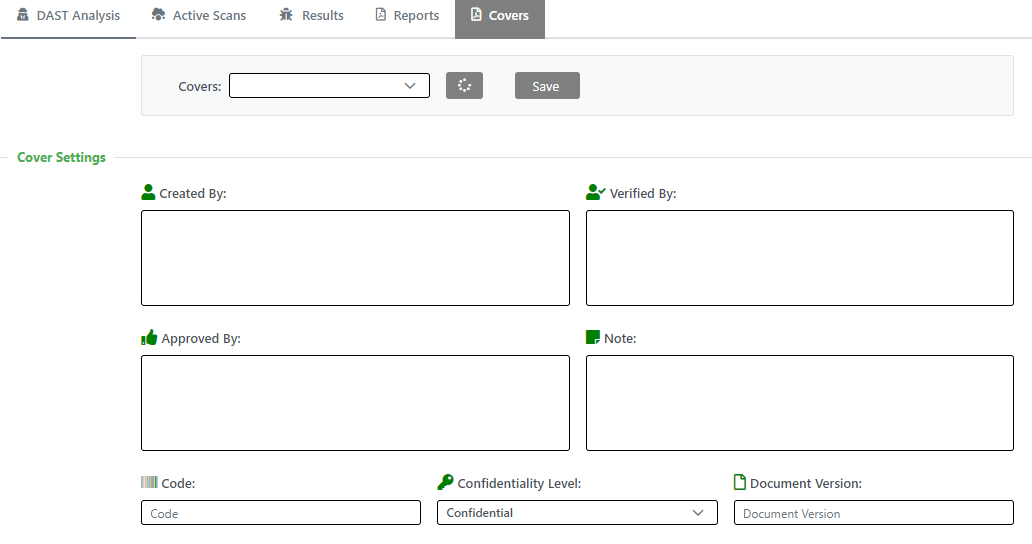
>You can upload two logos, and define the ISO 9001 responsability chain (Created By, Verified By, Approved By. You can add a Disclaimer Note, a ISO template code, the Confidentiality Level and a Document version.
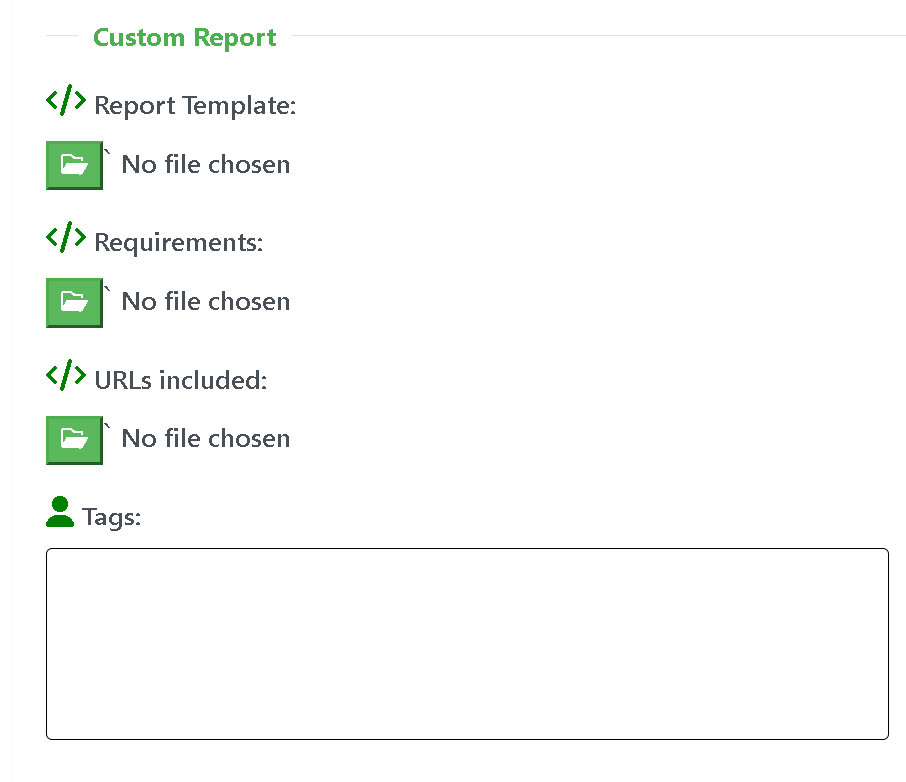
Enterprise Report. Fully-customized automatically-generated Executive Summary and Technical reports, starting from a customer-driven Form Template (on which customized tags will be filled), CWE Requirements, Report template, written in the preferred language (Report template in Word format, containg the custom tags). You can also import a plaintext list about which MicroServices/Pages should be included in the custom report.
Security Scanners
Dynamic Reviewer, further its own native engine, is Powered By the following open source tools:
OWASP ZAP (Proxy)
CycloneDX (SBOM)
p0f, DataSploit (Fingerprinting)
pWeb, Enlightn, Magescan, Droopescan, Joomscan, Typo3scan(Wordpress, Laravel, Magento, Drupal, Joomla, TYPO3, and other PHP CMS Discovery)
wXf, SearchSploit (Ready-to-use Web Exploits)
DirBuster (SiteMap)
OSVDB, NVD, GHSA, RUSTSEC, PYUP, ALPINE, Exploit-DB (Vulnerability Databases)
retireJS (Outdated and vulnerable JavaScript and TypeScript 3rd-party libraries detection)
0d1n (Login brute-force)
John The Ripper (Password recovery and cracking)
Wfuzz, WebFormFuzzer, SQLInjectionFuzzer, FuzzAPI (Web Application and REST API Fuzzers)
SQLMap (SQL Injection and DB takeover)
Selenium (WebDrivers for Crawling)
Postman (API support)
All vulnerabilities resulting from the above OSS tools, will be collected and correlated and included in the Dynamic Reviewer results.
Further the above listed tools, Dynamic Reviewer provides its own Security Scan Engine.
Each Security Scanner makes different fields available.
It is up to you to purchase and manage the required Security Scanner’s License in case of you are using a Commercial Product.
Our tool imports the results only, without running your Security Scanner.
Our Own Security Scan Engine
Main features:
Technology Discovery
Port scanning, Services Discovery (no need of nmap or nessus)
Audit, Bruteforce, Evasion, grep ancd Mangle modes
Cookie-jar/cookie-string support.
Custom header support.
SSL support with fine-grained options.
User Agent spoofing.
HTTP/2 support.
Proxy support for SOCKS4, SOCKS4A, SOCKS5, HTTP/1.1 and HTTP/1.0.
Proxy authentication.
Site authentication (SSL-based, form-based, Cookie-Jar, Basic-Digest, NTLMv1, Kerberos and others).
Automatic log-out detection and re-login during the scan (when the initial login was performed via the
autologin,login_scriptorproxyplugins).Custom 404 page detection.
UI abstraction:
Command-line Interface.
Web User Interface.
Pause/resume functionality.
Hibernation support -- Suspend to and restore from disk.
High performance asynchronous HTTP requests.
With adjustable concurrency.
With the ability to auto-detect server health and adjust its concurrency automatically.
Support for custom default input values, using pairs of patterns (to be matched against input names) and values to be used to fill in matching inputs.
Discovery Mode
Through Passive Fingerprinting it provides discovery of: Host OS, Web Application Server (WAF), Web Server, Application Server, DB type, CMS, Directory bruteforce, DNS WildCard, domain_dot, .NET Errors, Favicon identification, Backdoors, Captchas, DVCS, GIt/Svn files, Fingerprint BING, Fingerprint Google, Fingerprint PKS, Fingerprint WAF, GHDB, Google Spider, Halberd, HMAP, HTTPS over HTTP, Import Results, Oracle discovery, Phish Tank, phpeggs, phpinfo, pykto, RIA Enumerator, robots.txt reader, Server Header, Server Status, Shared Hosting, SiteMap Reader, Splash, spiderMan, URL Fuzzer, urllist.txt Reader, userDir, webDiff, webSpider, wordNet, Wordpress Fingerprint, Laravel Vulnerabilities, WDSL Finder, XSSedDotCom, Yahoo Site Explorer, zone_h.
Audit mode
Audit of LDAP, Blind SQL Injection. Buffer Overflow, webDAV, eval, file Upload, format String vulnerability, legacy FrontPage web apps, Global Redirect, HTA Access Methods, Local File Include, mx Injection, OS Command Injection, Phishing attack vector, preg_replace, re-DoS, Remote File Include, Respnse Splitting, SQL Injection, Server-Side Injection, Weak SSL Certificate, Unsecure Connection, Xpath Injection, XSRF, Cross-Site Scripting (XSS), XST.
Bruteforce Mode
Usage of Bruteforce for: Basic Authentication and Web Form Authentication.
Evasion Mode
Seeking for: backSpace Between Dots, full Width Encode, modsecurity, reversed Slashes, rndCase, rndHexEncode, rndParam, rndPath, sel Reference, shift out-shift in Between Dots.
Grep Mode
Find: Ajax, blank Body, Code Disclosure, Collect Cookies, Credit Cards, Directory Indexing, DOM XSS, .NET Event Validation, Error 500, Error Pages, Feeds, File Upload, Comments, Form Autocomplete, e-mails. Hashes, HTTP Auth detect, HTTP in Body, language, Meta Tags, motw, Objects, Oracle, Password Profiling, Path Disclosure, Private IPs, SSN, Strage HTTP Code, Strange Headers, Strange Reason, SVN Users, User-defined Regex, WDSL Grepper.
Mangle Mode
Usage of Stream Editor (sed) for pattern matching: Privilege Escalation, Exploiting sudo/administrator rights, DirtyPipe (CVE 2022-0847), Windows Privilege Escalation: PrintNightmare.
Client-Side scanning
Dynamic Reviewer includes an integrated, real browser environment in order to provide sufficient coverage to modern web applications which make use of technologies such as HTML5, JavaScript, DOM manipulation, AJAX, etc.
In essence, this turns Dynamic Reviewer into a DOM and JavaScript debugger, allowing it to monitor DOM events and JavaScript data and execution flows. As a result, not only can the system trigger and identify DOM-based issues, but it will accompany them with a great deal of information regarding the state of the page at the time.
Relevant information include:
Page DOM, as HTML code.
With a list of DOM transitions required to restore the state of the page to the one at the time it was logged.
Original DOM (i.e. prior to the action that caused the page to be logged), as HTML code.
With a list of DOM transitions.
Data-flow sinks -- Each sink is a JS method which received a tainted argument.
Parent object of the method (ex.:
DOMWindow).Method signature (ex.:
decodeURIComponent()).Arguments list.
With the identified taint located recursively in the included objects.
Method source code.
JS stacktrace.
Execution flow sinks -- Each sink is a successfully executed JS payload, as injected by the security checks.
Includes a JS stacktrace.
JavaScript stack-traces include:
Method names.
Method locations.
Method source codes.
Argument lists.
Compatible with ES5 and ES6
Integrated with Wapplyzer
A bunch of frameworks are supported, like React, Angular, Ionic, Vue, Cordova/Phonegap and Node.js

In essence, you have access to roughly the same information that your favorite debugger (for example, FireBug) would provide, as if you had set a breakpoint to take place at the right time for identifying an issue.
DOM Security Issues
The list of DOM Security Issues found by Dynamic Reviewer are:
# | Issue | Type | Category |
1 | Code Injection - Client Side | Error | Code Execution |
2 | Code Injection - PHP input wrapper | Error | Code Execution |
3 | Code injection - Timing | Error | Code Execution |
4 | File Inclusion - Client Side | Error | Code Execution |
5 | OS Command Injection - Client Side | Error | Code Execution |
6 | OS Command Injection - Timing | Error | Code Execution |
7 | Remote File Inclusion Client Side | Error | Code Execution |
8 | Session Fixation | Error | Code Execution |
9 | XSS - DOM | Error | Code Execution |
10 | XSS - DOM - Script Context | Error | Code Execution |
11 | XSS - Event | Error | Code Execution |
12 | Data from attacker controllable navigation based DOM properties is executed as HTML | Error | Code Execution |
13 | Data from attacker controllable navigation based DOM properties is executed as JavaScript | Error | Code Execution |
14 | Data from attacker controllable URL based DOM properties is executed as HTML | Error | Code Execution |
15 | Data from attacker controllable URL based DOM properties is executed as JavaScript | Error | Code Execution |
16 | Non-HTML format Data from DOM storage is executed as HTML | Warning | Code Execution |
17 | Non-JavaScript format Data from DOM storage is executed as JavaScript | Warning | Code Execution |
18 | HTML format Data from DOM storage is executed as HTML | Info | Code Execution |
19 | JavaScript format Data from DOM storage is executed as JavaScript | Info | Code Execution |
20 | Data from user input is executed as HTML | Warning | Code Execution |
21 | Data from user input is executed as JavaScript | Warning | Code Execution |
22 | Non-HTML format Data taken from external site(s) (via Ajax, WebSocket or Cross-Window Messages) is executed as HTML | Error | Code Execution |
23 | Non-JavaScript format Data taken from external site(s) (via Ajax, WebSocket or Cross-Window Messages) is executed as JavaScript | Error | Code Execution |
24 | HTML format Data taken from external site(s) (via Ajax, WebSocket or Cross-Window Messages) is executed as HTML | Warning | Code Execution |
25 | JavaScript format Data taken from external site(s) (via Ajax, WebSocket or Cross-Window Messages) is executed as JavaScript | Warning | Code Execution |
26 | Non-HTML format Data taken from across sub-domain (via Ajax, WebSocket or Cross-Window Messages) is executed as HTML | Warning | Code Execution |
27 | Non-JavaScript format Data taken from across sub-domain (via Ajax, WebSocket or Cross-Window Messages) is executed as JavaScript | Warning | Code Execution |
28 | HTML format Data taken from across sub-domain (via Ajax, WebSocket or Cross-Window Messages) is executed as HTML | Info | Code Execution |
29 | JavaScript format Data taken from across sub-domain (via Ajax, WebSocket or Cross-Window Messages) is executed as JavaScript | Info | Code Execution |
30 | Non-HTML format Data taken from same domain (via Ajax, WebSocket or Cross-Window Messages) is executed as HTML | Warning | Code Execution |
31 | Non-JavaScript format Data taken from same domain (via Ajax, WebSocket or Cross-Window Messages) is executed as JavaScript | Warning | Code Execution |
32 | HTML format Data taken from same domain (via Ajax, WebSocket or Cross-Window Messages) is executed as HTML | Info | Code Execution |
33 | JavaScript format Data taken from same domain (via Ajax, WebSocket or Cross-Window Messages) is executed as JavaScript | Info | Code Execution |
34 | Weak Hashing algorithms are used | Error | Cryptography |
35 | Weak Encryption algorithms are used | Error | Cryptography |
36 | Weak Decryption algorithms are used | Error | Cryptography |
37 | Cryptographic Hashing Operations were made | Info | Cryptography |
38 | Encryption operations were made | Info | Cryptography |
39 | Decryption operations were made | Info | Cryptography |
40 | Potentially Sensitive Data is leaked (via HTTP, Ajax, WebSocket or Cross-Window Messages) | Error | Data Leakage |
41 | Potentially Sensitive Data is leaked through Referrer Headers | Error | Data Leakage |
42 | Data is leaked through HTTP | Warning | Data Leakage |
43 | Data is leaked through WebSocket | Warning | Data Leakage |
44 | Data is leaked through Cross-Window Messages | Warning | Data Leakage |
45 | Data is leaked through Referrer Headers | Warning | Data Leakage |
46 | Potentially Sensitive Data is stored on Client-side Storage (in LocalStorage, SessionStorage, Cookies or IndexedDB) | Warning | Data Storage |
47 | Data is stored on Client-side Storage (in LocalStorage, SessionStorage, Cookies or IndexedDB) | Info | Data Storage |
48 | Cross-window Messages are sent insecurely | Error | Communication |
49 | Cross-site communications are made | Warning | Communication |
50 | Communications across sub-domains are made | Warning | Communication |
51 | Same Origin communications are made | Info | Communication |
52 | JavaScript code is loaded from Cross-site Sources | Warning | JS Code |
53 | JavaScript code is loaded from across sub-domains | Info | JS Code |
54 | JavaScript code is loaded from Same Origin | Info | JS Code |
Configuration options include:
Adjustable pool-size, i.e. the amount of browser workers to utilize.
Timeout for each job.
Worker TTL counted in jobs -- Workers which exceed the TTL have their browser process re-spawned.
Ability to disable loading images.
Adjustable screen width and height.
Can be used to analyze responsive and mobile applications.
Ability to wait until certain elements appear in the page.
Configurable local storage data.
Coverage
The system can provide great coverage to modern web applications due to its integrated browser environment. This allows it to interact with complex applications that make heavy use of client-side code (like JavaScript) just like a human would.
In addition to that, it also knows about which browser state changes the application has been programmed to handle and is able to trigger them programmatically in order to provide coverage for a full set of possible scenarios.
By inspecting all possible pages and their states (when using client-side code) Dynamic Reviewer is able to extract and audit the following elements and their inputs:
Forms
Along with ones that require interaction via a real browser due to DOM events.
User-interface Forms
Input and button groups which don't belong to an HTML
<form>element but are instead associated via JS code.
User-interface Inputs
Orphan
<input>elements with associated DOM events.
Links
Along with ones that have client-side parameters in their fragment, i.e.:http://example.com/#/?param=val¶m2=val2
With support for rewrite rules.
Link Templates -- Allowing for extraction of arbitrary inputs from generic paths, based on user-supplied templates -- useful when rewrite rules are not available.
Along with ones that have client-side parameters in their URL fragments, i.e.:http://example.com/#/param/val/param2/val2
Cookies
Headers
Generic client-side elements which have associated DOM events.
AJAX-request parameters.
JSON request data.
XML request data.
Web Security Issues
Dynamic Reviewer runs testing to identify all of the major web application security vulnerabilities, such as SQL Injection, Cross-Site Scripting, Cross Site Request Forgery, and more. Dynamic Reviewer has an ever growing list of tests that are run against the application and APIs to identify potential security vulnerabilities.
Dynamic Reviewer provides the following HTTP passive and active scan rules which find specific vulnerabilities. Dynamic Reviewer can discover the following Web Security Issues:
Alert | Risk | Type | CWE | WASC |
|---|---|---|---|---|
Medium | Active | 548 | 48 | |
Low | Passive | 497 | 13 | |
Passive | ||||
Medium | Passive | 598 | 13 | |
Medium | Passive | 598 | 13 | |
Medium | Passive | 598 | 13 | |
Active | ||||
High | Active | 22 | 33 | |
High | Active | 22 | 33 | |
High | Active | 22 | 33 | |
High | Active | 22 | 33 | |
High | Active | 22 | 33 | |
High | Active | 98 | 5 | |
High | Active | 541 | 34 | |
Medium | Active | 541 | 34 | |
High | Active | 541 | 33 | |
Medium | Passive | 1395 | ||
Info | Tool | 13 | ||
Low | Passive | 497 | 13 | |
Low | Passive | 1004 | 13 | |
Low | Passive | 614 | 13 | |
Info | Passive | 525 | 13 | |
Passive | ||||
Low | Passive | 829 | 15 | |
Passive | ||||
Info | Passive | 345 | 12 | |
Info | Passive | 345 | 12 | |
Passive | ||||
Medium | Passive | 1021 | 15 | |
Medium | Passive | 1021 | 15 | |
Medium | Passive | 1021 | 15 | |
Medium | Passive | 1021 | 15 | |
Low | Passive | 693 | 15 | |
Low | Passive | 1295 | 13 | |
Info | Passive | 598 | 13 | |
Information Disclosure - Sensitive Information in HTTP Referrer Header | Info | Passive | 598 | 13 |
Medium | Passive | 20 | 20 | |
Info | Passive | 615 | 13 | |
High | Passive | 601 | 38 | |
Info | Passive | 565 | 20 | |
Info | Passive | 20 | 20 | |
Info | Passive | 20 | 20 | |
Passive | ||||
Medium | Passive | 642 | 14 | |
Medium | Passive | 642 | 14 | |
Low | Passive | 642 | 14 | |
High | Passive | 642 | 14 | |
High | Passive | 642 | 14 | |
Info | Passive | 642 | 14 | |
Medium | Passive | 548 | 16 | |
High | Passive | 119 | 20 | |
Passive | ||||
Low | Passive | 319 | 15 | |
Low | Passive | 319 | 15 | |
Strict-Transport-Security Multiple Header Entries (Non-compliant with Spec) | Low | Passive | 319 | 15 |
Info | Passive | 319 | 15 | |
Strict-Transport-Security Missing Max-Age (Non-compliant with Spec) | Low | Passive | 319 | 15 |
Strict-Transport-Security Defined via META (Non-compliant with Spec) | Low | Passive | 319 | 15 |
Strict-Transport-Security Max-Age Malformed (Non-compliant with Spec) | Low | Passive | 319 | 15 |
Strict-Transport-Security Malformed Content (Non-compliant with Spec) | Low | Passive | 319 | 15 |
Passive | ||||
Server Leaks its Webserver Application via "Server" HTTP Response Header Field | Info | Passive | 497 | 13 |
Server Leaks Version Information via "Server" HTTP Response Header Field | Low | Passive | 497 | 13 |
Server Leaks Information via "X-Powered-By" HTTP Response Header Field(s) | Low | Passive | 497 | 13 |
Passive | ||||
Medium | Passive | 693 | 15 | |
Info | Passive | 693 | 15 | |
Info | Passive | 693 | 15 | |
Low | Passive | 497 | 13 | |
Low | Passive | 311 | 4 | |
Medium | Passive | 319 | 15 | |
Medium | Passive | 319 | 15 | |
Info | Passive | 20 | 20 | |
Big Redirect Detected (Potential Sensitive Information Leak) | Passive | |||
Big Redirect Detected (Potential Sensitive Information Leak) | Low | Passive | 201 | 13 |
Multiple HREFs Redirect Detected (Potential Sensitive Information Leak) | Low | Passive | 201 | 13 |
Active | ||||
High | Active | 541 | 34 | |
High | Active | 541 | 34 | |
Passive | ||||
Low | Active | 311 | 4 | |
Active | ||||
High | Active | 78 | 31 | |
High | Active | 78 | 31 | |
Passive | ||||
Info | Passive | 524 | 13 | |
Info | Passive | 524 | 13 | |
Info | Passive | 524 | 13 | |
Passive | ||||
Info | Passive | 525 | ||
Info | Passive | 525 | ||
Medium | Active | 20 | 20 | |
Medium | Passive | 532 | 13 | |
Medium | Active | 400 | 10 | |
Passive | ||||
Low | Passive | 1275 | 13 | |
Low | Passive | 1275 | 13 | |
Low | Passive | 1275 | 13 | |
Passive | ||||
Low | Passive | 693 | 15 | |
Low | Passive | 693 | 15 | |
Low | Passive | 693 | 15 | |
Medium | Passive | 693 | 15 | |
Medium | Passive | 693 | 15 | |
Medium | Passive | 693 | 15 | |
Medium | Passive | 693 | 15 | |
Medium | Passive | 693 | 15 | |
Medium | Passive | 693 | 15 | |
Medium | Passive | 693 | 15 | |
Medium | Passive | 693 | 15 | |
Info | Passive | 693 | 15 | |
Medium | Passive | 693 | 15 | |
Low | Passive | 489 | 13 | |
Info | Passive | 284 | 2 | |
Info | Active | 16 | 20 | |
Low | Passive | 933 | 14 | |
High | Passive | 359 | 13 | |
Passive | ||||
Low | Passive | 693 | 15 | |
Low | Passive | 16 | 15 | |
Passive | ||||
Passive | ||||
Info | Passive | 319 | 13 | |
High | Passive | 642 | 13 | |
Info | Passive | 319 | 13 | |
Medium | Active | 530 | 34 | |
Low | Passive | 497 | 13 | |
Low | Passive | 497 | 13 | |
Medium | Passive | 264 | 14 | |
Medium | Passive | 540 | 13 | |
High | Tool | 287 | 1 | |
High | Tool | 205 | 2 | |
Info | Passive | 200 | 13 | |
Info | Active | |||
Passive | ||||
Medium | Passive | 287 | 1 | |
Medium | Passive | 326 | 4 | |
Medium | Active | 311 | 4 | |
High | Active | 20 | 20 | |
Medium | Passive | 1022 | ||
Info | Passive | |||
Low | Passive | 749 | ||
Info | Passive | |||
Info | Passive | |||
Info | Passive | |||
Passive | ||||
High | Passive | 829 | 15 | |
High | Passive | 829 | 15 | |
Medium | Passive | 1104 | 45 | |
Medium | Passive | 352 | 9 | |
Medium | Active | 352 | 9 | |
Info | Active | 20 | 20 | |
High | Active | 119 | 20 | |
Active | ||||
High | Active | 264 | 14 | |
High | Active | 264 | 14 | |
High | Active | 264 | 14 | |
High | Active | 20 | 20 | |
High | Active | 20 | 20 | |
Active | ||||
High | Active | 601 | 38 | |
High | Active | 601 | 38 | |
High | Active | 601 | 38 | |
High | Active | 601 | 38 | |
Medium | Active | 120 | 7 | |
Medium | Active | 134 | 6 | |
Medium | Active | 190 | 3 | |
Medium | Active | 113 | 25 | |
Medium | Active | 472 | 20 | |
High | Active | 97 | 31 | |
High | Active | 79 | 8 | |
High | Active | 384 | 37 | |
High | Active | 79 | 8 | |
High | Active | 90 | 29 | |
Info | Active | 79 | 8 | |
Info | Active | 79 | 8 | |
High | Active | 89 | 19 | |
High | Active | 89 | 19 | |
High | Active | 89 | 19 | |
High | Active | 89 | 19 | |
High | Active | 89 | 19 | |
Info | Active | 204 | 13 | |
High | Active | 89 | 19 | |
Medium | Active | 204 | 45 | |
High | Active | 79 | 8 | |
High | Active | 89 | 19 | |
Medium | Active | 94 | 14 | |
Medium | Active | 215 | 13 | |
High | Active | 79 | 8 | |
Medium | Active | 94 | 14 | |
High | Active | 943 | 19 | |
Medium | Active | 215 | 13 | |
Medium | Active | 538 | 13 | |
Medium | Active | |||
Medium | Active | 348 | ||
Medium | Active | 444 | ||
Active | ||||
Info | Active | 942 | 14 | |
Medium | Active | 942 | 14 | |
High | Active | 942 | 14 | |
Medium | Active | |||
Medium | Active | 215 | 13 | |
Active | ||||
High | Active | 117 | 20 | |
High | Active | 117 | 20 | |
Medium | Active | 776 | 44 | |
High | Active | 78 | 20 | |
High | Active | 918 | 20 | |
High | Active | 117 | 20 | |
High | Active | 78 | 32 | |
Tool | ||||
Info | Tool | 16 | 15 | |
Info | Tool | 205 | 45 | |
Medium | Passive | 642 | 14 | |
Medium | Passive | 502 | ||
Medium | Passive | 345 | 15 | |
Passive | ||||
Low | Passive | 693 | 14 | |
Low | Passive | 693 | 14 | |
Low | Passive | 693 | 14 | |
Passive | ||||
Info | Passive | 352 | 9 | |
Info | Passive | 352 | 9 | |
Info | Passive | 352 | 9 | |
Info | Passive | 352 | 9 | |
Info | Passive | 352 | 9 | |
Info | Passive | 352 | 9 | |
Info | Passive | 352 | 9 | |
Info | Passive | 352 | 9 | |
Info | Passive | 436 | 15 | |
Medium | Active | 91 | 23 | |
High | Active | 89 | 19 | |
Active | ||||
High | Active | 94 | 20 | |
High | Active | 94 | 20 | |
High | Active | 78 | 31 | |
High | Active | 643 | 39 | |
Medium | Passive | 550 | 13 | |
High | Active | 611 | 43 | |
High | Active | 209 | 20 | |
High | Active | 917 | 20 | |
High | Active | 451 | ||
Info | Active | 205 | 45 | |
Medium | Active | 749 | 45 | |
High | Active | 91 | ||
Passive | ||||
Info | Passive | 565 | 15 | |
High | Active | 1230 | ||
High | Active | 1336 | 20 | |
High | Active | 1336 | 20 | |
High | Active | 78 | 31 | |
High | Active | 943 | 19 | |
Info | Script Passive | 200 | 13 | |
Low | Script Passive | 13 | ||
Info | Script Passive | 200 | 13 | |
Info | Script Passive | 352 | 9 | |
Information Disclosure - IP Exposed via F5 BIG-IP Persistence Cookie | Info | Script Passive | 311 | 13 |
Info | Script Passive | 311 | 13 | |
High | Script Passive | 311 | 13 | |
Low | Script Passive | 311 | 13 | |
Low | Script Passive | 327 | 13 | |
Info | Script Passive | 615 | 13 | |
Low | Script Passive | 200 | 13 | |
Medium | Script Passive | 200 | 13 | |
Info | Script Passive | 79 | 8 | |
Info | Script Passive | |||
Low | Script Passive | 693 | 15 | |
Info | Script Passive | |||
Medium | Script Passive | 20 | 13 | |
Low | Script Passive | 200 | 13 | |
High | Script Passive | 209 | 13 | |
Telerik UI for ASP.NET AJAX Cryptographic Weakness (CVE-2017-9248) | High | Script Passive | 327 | 13 |
Info | Script Passive | 434 | 20 | |
Low | Script Passive | 200 | 13 | |
High | Script Active | 346 | 9 | |
High | Script Active | 347 | 15 | |
High | Script Active | 74 | 33 | |
Low | Script Active | 425 | 34 | |
Info | Script Passive | 200 | 13 | |
Medium | Script Passive | 209 | 13 | |
Low | Script Passive | 200 | 13 | |
Medium | WebSocket Passive | 209 | 13 | |
Info | WebSocket Passive | |||
Low | WebSocket Passive | 209 | 13 | |
Info | WebSocket Passive | 359 | 13 | |
High | WebSocket Passive | 359 | 13 | |
Low | WebSocket Passive | |||
Info | WebSocket Passive | 284 | 2 | |
Information Disclosure - Suspicious Comments in XML via WebSocket | Info | WebSocket Passive | 200 | 13 |
Low | Passive | 209 | 13 | |
Client Passive | ||||
Information Disclosure - Information in Browser localStorage | Info | Client Passive | 359 | 13 |
Information Disclosure - Information in Browser sessionStorage | Info | Client Passive | 359 | 13 |
Information Disclosure - Sensitive Information in Browser Storage | Client Passive | |||
Information Disclosure - Sensitive Information in Browser localStorage | Low | Client Passive | 359 | 13 |
Information Disclosure - Sensitive Information in Browser sessionStorage | Low | Client Passive | 359 | 13 |
Client Passive | ||||
Medium | Client Passive | 922 | 13 | |
Info | Client Passive | 922 | 13 |
Note that these are examples of the alerts raised - many rules include different details depending on the exact problem encountered. For example, it covers also: React2Shell / React4Shell CVE-2025-55182 (React RSC Flight) and CVE-2025-66478 (Next.js App Router) and Angular CVE-2026-22610, CVE-2025-66412, CVE-2025-66035, and CVE-2025-59052.
Passive scans
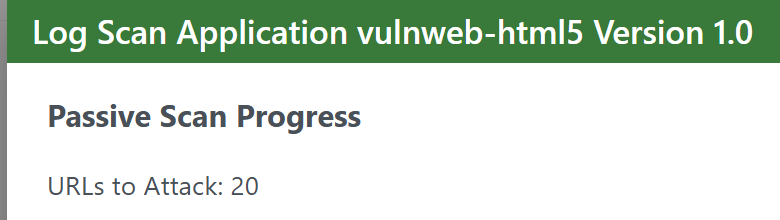
Thay review all HTTP requests and responses from the application, looking for indicators of security vulnerabilities. These scans do not change anything about the requests.
Passive Fingerprinting
Whenever Dynamic Reviewer obtains a fingerprint from the observed traffic, passing through any firewall, it identifies the Operating System and obtain some ancillary data needed for other analysis tasks.
For TCP/IP, the tool fingerprints the client-originating SYN packet and the first SYN+ACK response from the server, paying attention to factors such as the ordering of TCP options, the relation between maximum segment size and window size, the progression of TCP timestamps, and the state of about a dozen possible implementation quirks (e.g. non-zero values in "must be zero" fields). The metrics used for application-level traffic vary from one module to another; where possible, the tool relies on signals such as the ordering or syntax of HTTP headers or SMTP commands, rather than any declarative statements such as User-Agent. Application-level fingerprinting modules currently support HTTP, SMTP, FTP, POP3, IMAP, SSH, and SSL/TLS. Some of its capabilities include:
- Highly scalable and extremely fast identification of the operating system and software on both endpoints of a vanilla TCP connection - especially in settings where NMap probes are blocked, too slow, unreliable, or would simply set off alarms,
- Measurement of system uptime and network hookup, distance (including topology behind NAT or packet filters), and so on.
- Automated detection of connection sharing / NAT, load balancing, and application-level proxying setups.
- Detection of dishonest clients / servers that forge declarative statements such as X-Mailer or User-Agent.
Active scans
On the other hand, they will create and modify requests being sent to the application, sending test requests that will surface vulnerabilities that would not be caught in a passive scan.
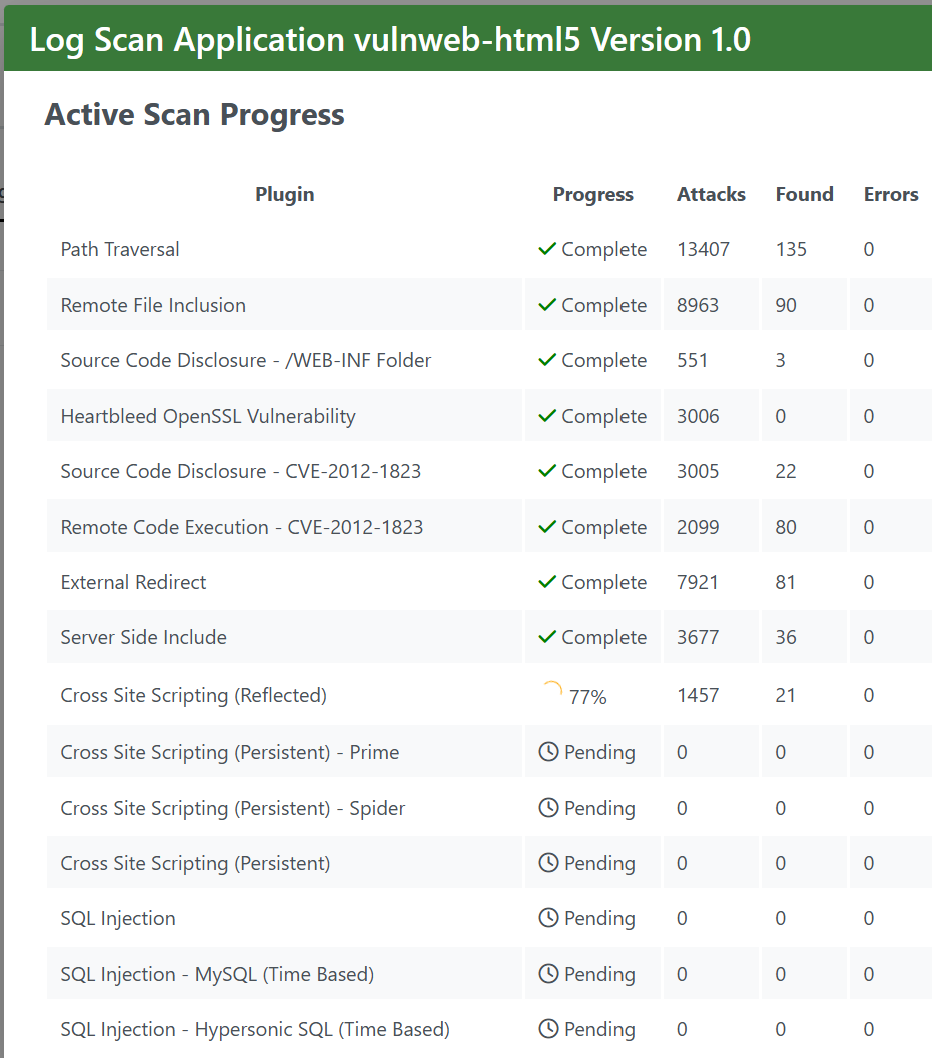
Active scans are definitely a better way to test for vulnerabilities in your application, as the test suite injects requests that will surface vulnerabilities. These scans are, however, actively attempting to attack the application, which may include creating or deleting data.
Fuzzing
Fuzzing is a technique of submitting lots of invalid or unexpected data to a target.
Dynamic Reviewer allows you to fuzz any request still using:
A built-in set of Payloads. Payload Generators generate the raw attacks that the fuzzer submits to the target application
Payload Processors are used to automatically change specific payloads before they are submitted
Fuzz Location Processors are used to automatically change all of the payloads before they are submitted
Custom scripts can be uploaded
Exploits
In Deep mode, Dynamic Reviewer, after discovering the target platform (OS, Web Server, Application Server, DB Server, CMS, etc.), will try all available exploits currently available in ExploitDB. This is usel for example to CMS platforms like WordPress, where is useless to apply classic PenTest, and makes better using an Exploit-based tecnique.
HOST SCANNING
Dynamic Reviewer is integrated with the following third-party Host Scanning tools:
Tenable Nessus (Commercial)
Rapid7 Nexpose (Commercial)
Censys (Commercial)
Shodan (Commercial)
The Dynamic Reviewer and thrid-party tool results will be automatically correlated for obtaining a unique results and a unified report.
PROOF-OF-EXPLOITS
Dynamic Reviewer is a DAST tool, it can detect all vulnerabilities of your site and list all possible Exploits. It won’t execute those Exploits.
If you need a full Penetration Test that includes the Exploits, you need more than one tool.
The Penetration Testing process requires an extensive set of tools. These include network (Host Scanning) and vulnerability scanning software, as well as tools that can launch specific attacks and exploits such as brute-force attacks or SQL injections, a custom reporting and a unified dashboard.
The final and most important stage of a Penetration Test is the Enterprise Report. This is a detailed report to be shared with the target company’s security team. It documents the pentesting process, vulnerabilities discovered (including the ones at client-side), proof that they are exploitable, and actionable recommendations for remediating them.
Internal teams can then use this information to improve security measures and remediate vulnerabilities. This can include patching vulnerable systems. These upgrades include rate limiting, new firewall or WAF rules, DDoS mitigation, and stricter form validation.
Dynamic Reviewer is fully integrated with Invicti Acunetix and Hunter.io for generating proof-of-exploits and a unified Enterprise Report, multi-lingual and fully customizable for the customer’s needs, and provides a unified dashboard, based on OWASP defectDojo.
REST API
Very simple and straightforward API.
Easy interoperability with non-Ruby systems.
Operates over HTTP.
Uses JSON to format messages.
Best Performances
Scan-times using traditional tools can range between a few hours to a couple of weeks – maybe even more. This means that wasted time can easily pile up, even when we’re talking about mere milliseconds per request/response.
Dynamic Reviewer benefits from great network performance due to its asynchronous HTTP request/response model. In this case – and from a high-level perspective –, asynchronous I/O means that you can schedule operations in such a way that they appear like they’re happening at the same time, which in turn means higher efficiency and better bandwidth utilization. That means:
Faster hyperlink processing
Faster numbering processing
Faster screenshot processing
It provides a high-performance environment for the tests that need to be executed while making adding new tests very easy. Thus, you can rest assured that the scan will be as fast as possible and performance will only be limited by your or the audited server’s physical resources.
Avoiding useless technical details, the gist is the following:
Every type of resource usage has been massively reduced — CPU, RAM, bandwidth.
CPU intensive code has been rewritten and key parts of the system are now 2 to 55 times faster, depending on where you look.
The scheduling of all scan operations has been completely redesigned.
DOM operations have been massively optimized and require much less time and overall resources.
Suspension to disk is now near instant.
Previously browser jobs could not be dumped to disk and had to be completed, which could cause large delays depending on the amount of queued jobs.
Default configuration is much less aggressive, further reducing the amount of resource usage and web application stress.
Talk is cheap though, so let’s look as some numbers under Linux:
Duration | RAM | HTTP requests | HTTP requests/second | Browser jobs | Seconds per browser job | |
|---|---|---|---|---|---|---|
Dynamic Reviewer | 00:02:14 | 150MB | 14,504 | 113.756 | 211 | 1.784 |
Best Competitor | 00:06:33 | 210MB | 34,109 | 101.851 | 524 | 3.88 |
Large real production site (cannot disclose) | ||||||
|---|---|---|---|---|---|---|
Duration | RAM | HTTP requests | HTTP requests/second | Browser jobs | Seconds per browser job | |
Dynamic Reviewer | 00:45:31 | 617MB | 60,024 | 47.415 | 9404 | 2.354 |
Best Competitor | 12:27:12 | 1,621MB | 123,399 | 59.516 | 9180 | 48.337 |
As you can see, the impact of the Performances' improvements becomes more substantial as the target’s complexity and size increases, especially when it comes to scan duration and RAM usage — and for the production site the new engine consistently yielded better coverage, which is why it performed more browser jobs.
End result:
Runs fast on under-powered machines.
You can run many more scans at the same time.
You can complete scans many times faster than before.
If you’re running scans in the “cloud”, it means that it’ll cost you many, many times less than before.
Machine Learning
The ML is what enables Dynamic Reviewer to learn from the scan it performs and incorporate that knowledge, on the fly, for the duration of the audit.
It uses various techniques to compensate for the widely heterogeneous environment of web applications. This includes a combination of widely deployed techniques (taint-analysis, fuzzing, differential analysis, timing/delay attacks) along with novel technologies (rDiff analysis, modular meta-analysis) developed specifically for the framework.
This allows the system to make highly informed decisions using a variety of different inputs; a process which diminishes false positives and even uses them to provide human-like insights into the inner workings of web applications.
Dynamic Reviewer is aware of which requests are more likely to uncover new elements or attack vectors and adapts itself accordingly.
Also, components have the ability to individually force the Core Engine to learn from the HTTP responses they are going to induce thus improving the chance of uncovering a hidden vector that would appear as a result of their probing.
DISCLAIMER: Due we make use of open source components (OWASP ZAP, w3af, pWeb, p0f, wXf, OSVDB), we do not sell the product, but we offer a yearly subscription-based Commercial Support, plus our Commercial Security Scanner.